
Vermut Lacuesta Reserva: the day we decided to treat vermouth like a great wine
In 2004 we decided to age vermouth in barrels as if it were a wine for ageing. What started as an experiment became a milestone: our Vermouth Reserva was born.
16 Jul 2025 | Martínez Lacuesta
There was a time when vermouth dominated the bars. In the 50s, 60s and part of the 70s, it was the aperitif par excellence in many Spanish regions. But with the opening up of the economy, the arrival of new drinks and soft drinks, and the unstoppable reign of beer, vermouth gradually lost its presence. It survived, yes, in some faithful areas, but without the energy of yesteryear. In this context, the Vermut Lacuesta label changed several times in an attempt to adapt to new tastes, although consumption continued to fall. It was, as they say in a hushed voice, a journey in the desert.
Until 2002, when Luis Martínez-Lacuesta decided to do something that would change not only our history, but that of vermouth in Spain.
.
A simple idea… and a revolutionary one.
The question was simple: what if we applied to vermouth all the knowledge we had in the ageing of wines? What if we treated it with the same care, the same respect, and the same level of demand as a Reserva or a Gran Reserva?
At that time, many people believed that vermouth was made with the worst wines. And that it was only drinkable if you added soda or siphon. But what if we could break this prejudice, what if we dignified vermouth by elevating its ageing process?
Luis contacted two leading cooperages: Gangutia (in Cenicero) and Guillermo (in Oyón). They were so enthusiastic about the idea that they each gave a barrel as a gift. . 225-litre Bordeaux casks, French oak with strong toasting. Thus, in July 2004, we filled the first two barrels with our classic red vermouth. The intention was to follow its evolution through tastings at 3, 5 and 7 months.
The alchemy of time
In February 2005, after a tasting with Pedro Puras, a technician at the Haro Oenological Station, the intuition was confirmed: 7 months of ageing was the perfect measure. The result was a beautifully coloured vermouth, with toasted nuances, an unexpected aromatic depth and, above all, a new elegance. The vermouth had not oxidised. It had been refined.
And then something unexpected happened: the first 600 bottles were sold in just two weeks.
The beginning of a new era
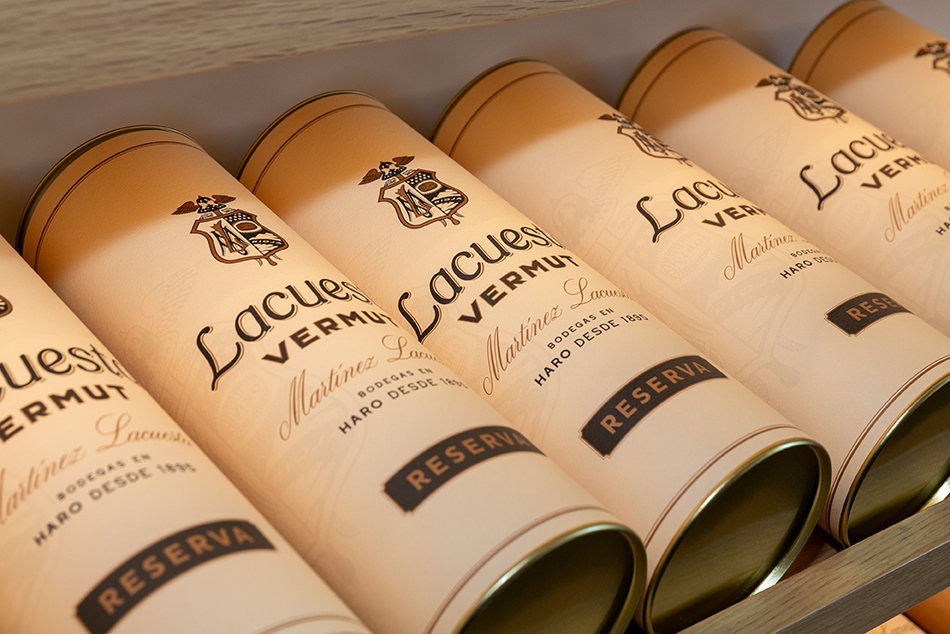
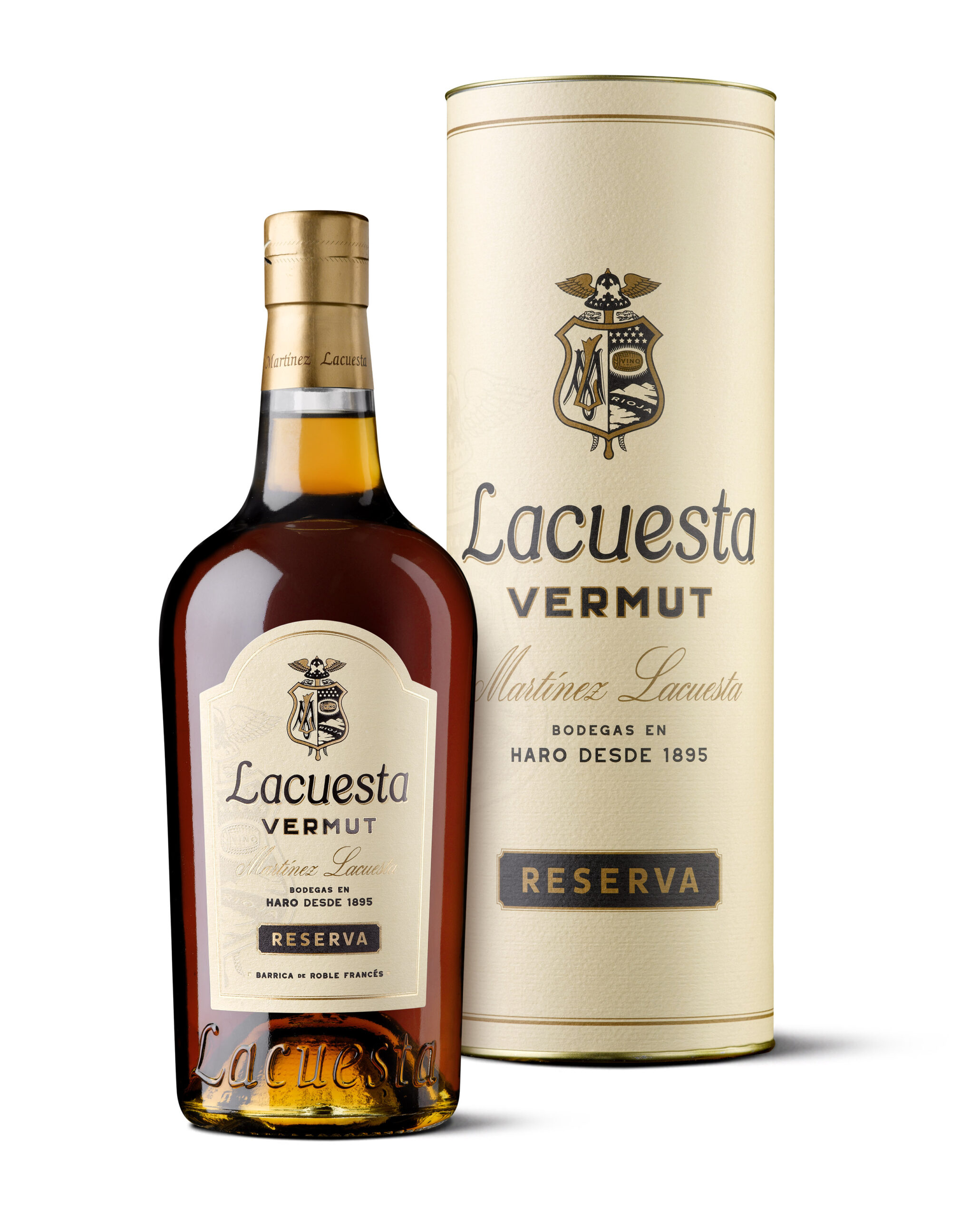
In view of its success, ten new barrels were ordered to start commercial production. And care was taken down to the last detail. An Italian-designed bottle was chosen – the “Bordelesa cubana” – which, at that time, was not used in Spain for vermouth, but for spirits such as rum or gin. A cylindrical case (canister) was also designed, inspired by those for malt whisky or cognac. The labels were glued on by hand. The result: a presentation that broke the mould… and soon began to be imitated by other brands.
The domino effect
The impact of Vermut Reserva went beyond our walls. Many historic wineries decided to revive their vermouths. Many others, with no previous experience, were encouraged to create their own based on albariños, sherries, riberas… even ciders. And consumers rediscovered that vermouth was not a second-rate product, but an aperitif full of nuances and possibilities. Vermouth Lacuesta was a pioneer in this revival. And even today we are still walking steadily, as the old José María Jové used to say: “You go slowly, but you will go far”.
By the end of that first year, 2005, we had already sold 4,436 bottles. An unthinkable figure just eight months earlier.
New versions, same philosophy
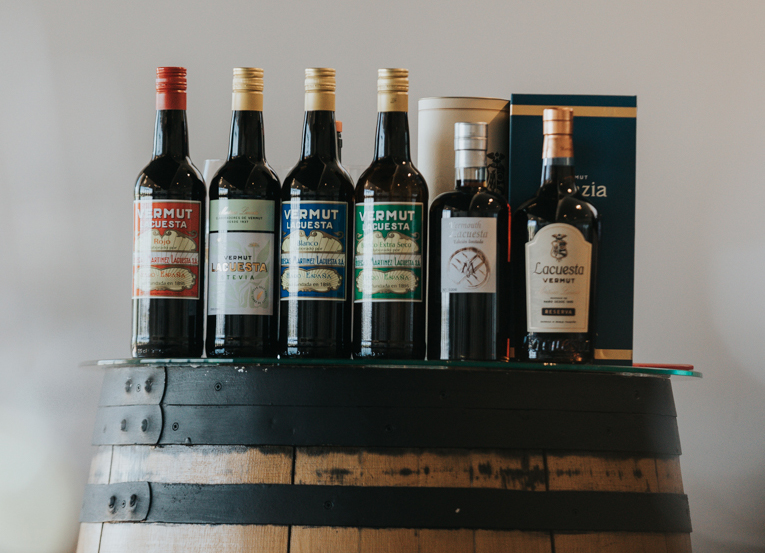
Over the years, new versions have arrived. The Vermouth Reserva Edición Limitada, aged for 14 months. The Reserva Acacia, aged in barrels of the same wood, with very different aromas. Or the white vermouths, dry and extra-dry, each with its own particular profile. We have even developed a sugar-free vermouth, sweetened with stevia, which has been very well received by the general public and by those looking for products without added sugars.
At the same time, when the new winery was built (2007-2009), a specific space was set aside for the production of vermouth, physicallyseparated from the wine cellar by a public road, as required by the Rioja Control Board. In this way, both processes are totally independent and we can continue to produce our vermouth with the same freedom, demand and coherence with which this project was born.