
Javier Bañales: “Rioja is more alive than ever”.
Javier Bañales reflects on the current situation in Rioja and shares the concept that defines Martínez Lacuesta's style: tuning. A way of winemaking that respects time, mouth and memory.
06 Jul 2025 | Martínez Lacuesta
Javier Bañales, CEO of Martínez Lacuesta, participated in episode #4 of the podcast Sólido y Líquido. In this first instalment of his intervention, we share two key blocks of the conversation: his vision of the moment Rioja is going through and the concept that defines the style of our house: tuning. Identity, time and precision as the pillars of a wine with purpose.
Rioja is more alive than ever
It is a fact that Rioja, which this year is celebrating the centenary of the appellation, is going through some uncertain times. We are all aware that consumption in general has fallen, but I see Rioja as more alive than ever. More alive than ever in the sense that centenary, historic wineries, such as ours and some others, are in the midst of a boom in terms of vitality and positioning. There is a positive wave towards classic, fine wines and, on the other hand, young, dynamic projects are emerging, from small vignerons, from small winemakers, who are recovering, maintaining or interpreting the historic vineyards in their own way.
I believe that despite the fact that consumption figures, trends, uncertainty and fears do not perhaps cover everything that is happening, I personally, who have been in Rioja for three and a half years, see it as more dynamic and lively than ever. Moreover, the foundations are also being laid for a rediscovery, because it is not a discovery, of Rioja whites. Obviously, the laws of supply and demand are what they are, the trends are what they are, but, I insist, for me it is a very dynamic and very precise moment, and also a time of selection. Everything has to pass through the filter and then we will see what is left.
“We are wine tuners
It comes as a surprise that we are known as wine tuners. To explain it we can make a simile with music, because it is practically the same sensation as musical tuning, because when you tune an instrument you are preparing yourself to print art and make you feel through a score or an instrument.
The first thing that stands out about the word tuners is that it includes the word fine. We define the word afinador as three variables. The first is precisely because we make fine wines. In fact, these words used to appear on the labels, although nowadays only López de Heredia can put it on Viña Tondonia, because he was the only one who defended the use that was being made in Rioja of the word “vinos finos” and that it was not fair, therefore, that it should only appear in Jerez.
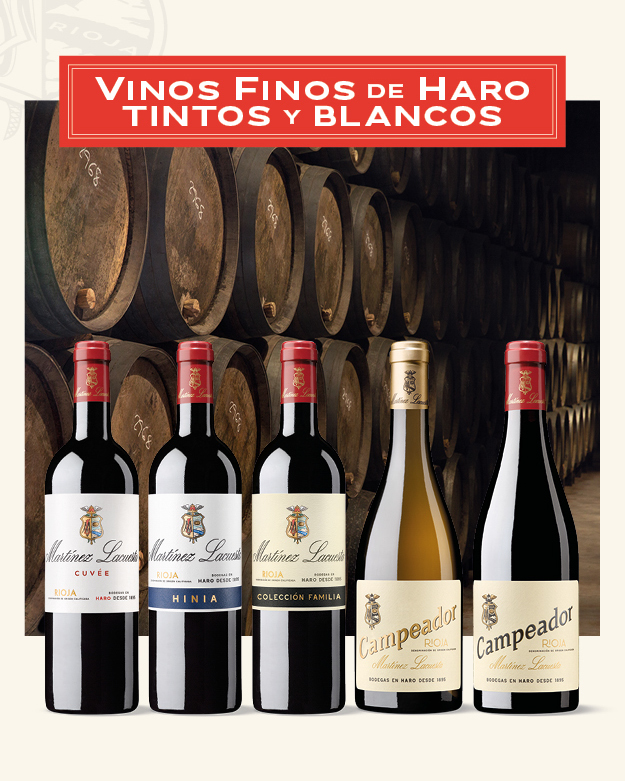
The second part of fino is because we mainly refine wines in used barrels. There are two ways of ageing, new barrels for less time and used barrels for longer ageing. In this work we have an obsession to always work with used barrels, you have to be very careful to work this way, because we do not seek extraction in the wines, we do not pump over or make very intense extractions during fermentation. We go for finesse and refinement and above all we have a very clear obsession with refinement in the bottle. Once the cork has been put in place, the wine begins to manage itself. Everything you have done before has to be reflected in the bottle and it will be the time that puts that wine in its place because time is fundamental for our style of wines.
Y la última parte de fino es que son vinos más delgados, muy poco tánicos. Vinos frescos que conseguimos porque no están envueltos de un súper alcohol o un súper tanino, con lo cual te dejamos ese hombro de la acidez un poquito más limpio. Es el estilo en el que creemos. Con mucha fruta, muy frontopalatales, muy frescos, con una caricia un poco especial. Tenemos una obsesión absoluta con cómo nuestros vinos acarician la boca de nuestros clientes.